Our Contributions to Scientific Resources
Open Science Framework Projects
-

Validation Toolkit for Ear-Level EEG Sensors
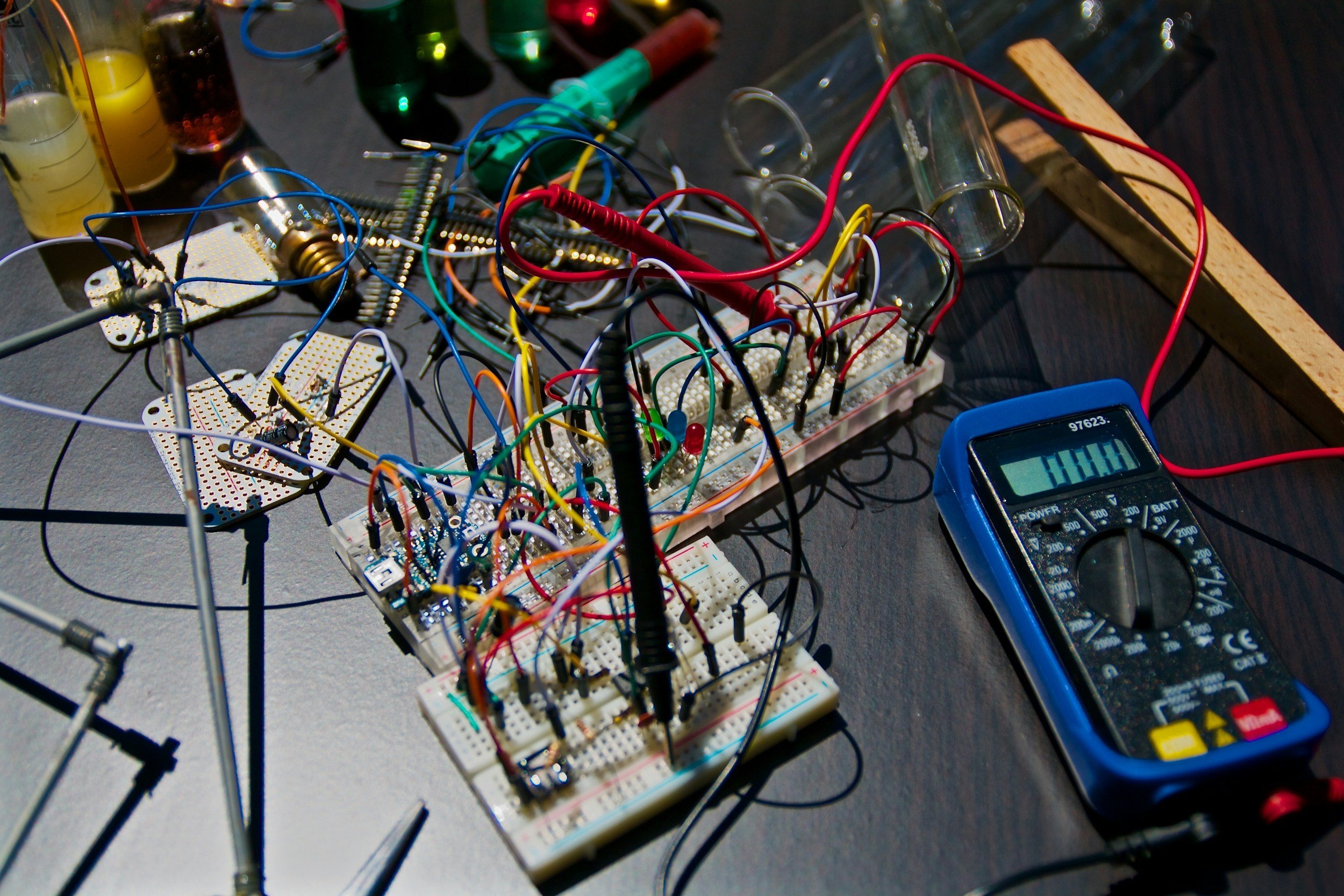
EEG-enabled earbuds represent a promising frontier in brain activity monitoring beyond traditional laboratory testing. Their discrete form factor and proximity to the brain make them the ideal candidate for the first generation of discrete non-invasive brain--computer interfaces (BCIs). However, this new technology will require comprehensive characterization before we see widespread consumer and health-related usage. To address this need, we developed a validation toolkit that aims to facilitate and expand the assessment of ear-EEG devices.
The validation toolkit includes:
EaR-P Lab: a Python application for running a test battery of 9 different EEG paradigms (including auditory and visual transient and steady-state response paradigms)
A step-by-step guide to building your own ear-EEG phantom for controlled, ear-specific EEG hardware testing (compares salt-doped Agar, salt-doped ballistic gelatin and carbon fibre-doped silicone phantom materials)
-
Low-cost Trigger Box for EEG recordings
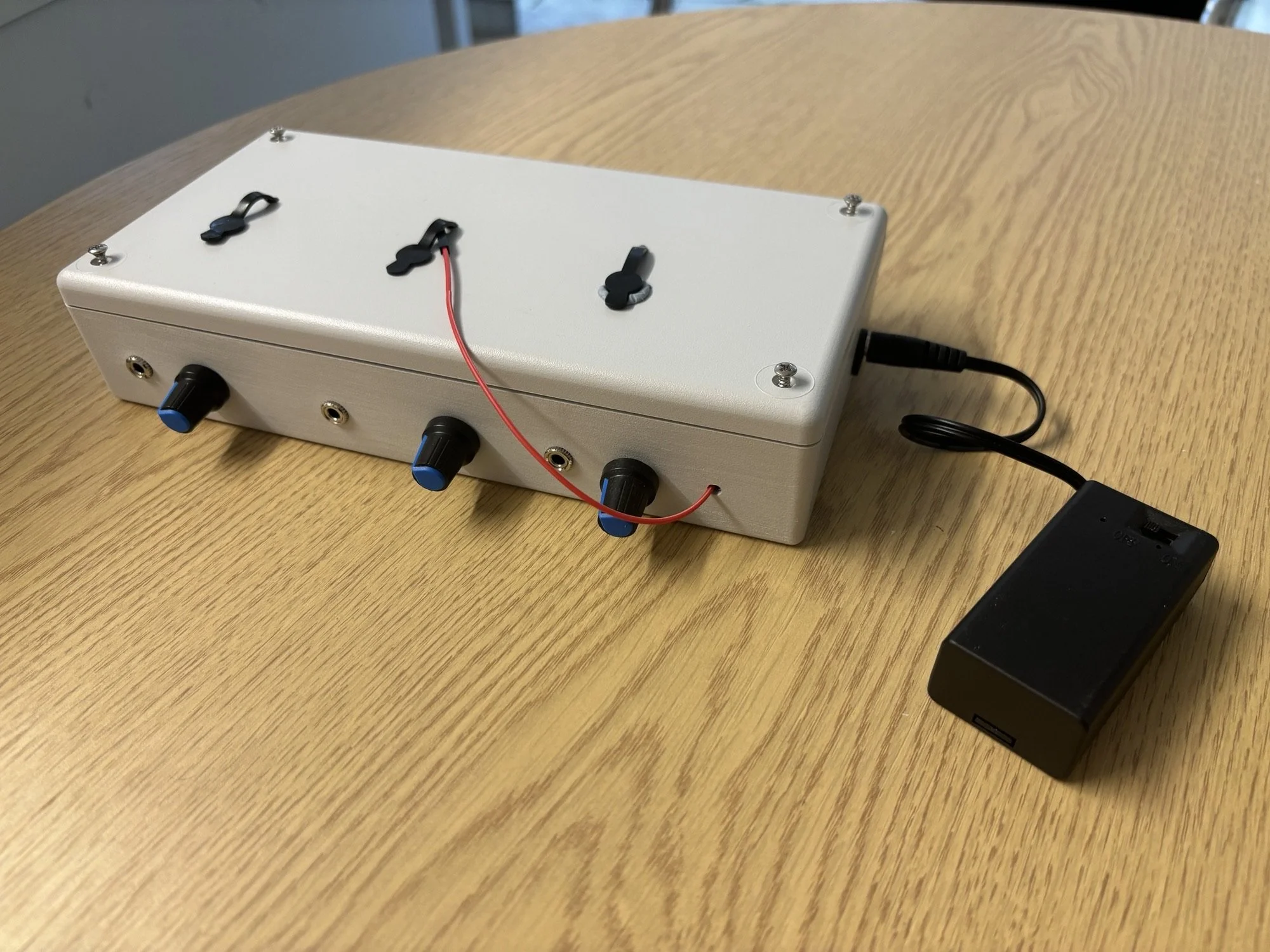
Electrophysiological experiments rely on precise timing of event or stimulus presentation to timely relate the recorded signals with stimulation instances for processing and analysis. The timing of the stimulus presentation can vary from system to system depending on hardware (e.g., computer specifications, screen refresh rates, etc.) and software configurations (e.g., level of system control, drivers, scheduling, network characteristics, etc.). To reliably process experiment data, this timing of events needs to be fully characterized or controlled using specialized accessories traditionally referred to as Trigger Boxes.
This project entails the design, construction and validation of a stimulus-event trigger box intended to be used for synchronization of events in EEG experiments.
In Phase 1, a trigger box compatible with participant push-button events, screen image flip events and audio events, was designed, built, and validated.
In Phase 2, a subsequent addition to allow for PPG-based heart-rate events and integrate lab-streaming-layer (LSL) synchronization will be developed.
-
Spectro temporal vocoded EEG Dataset
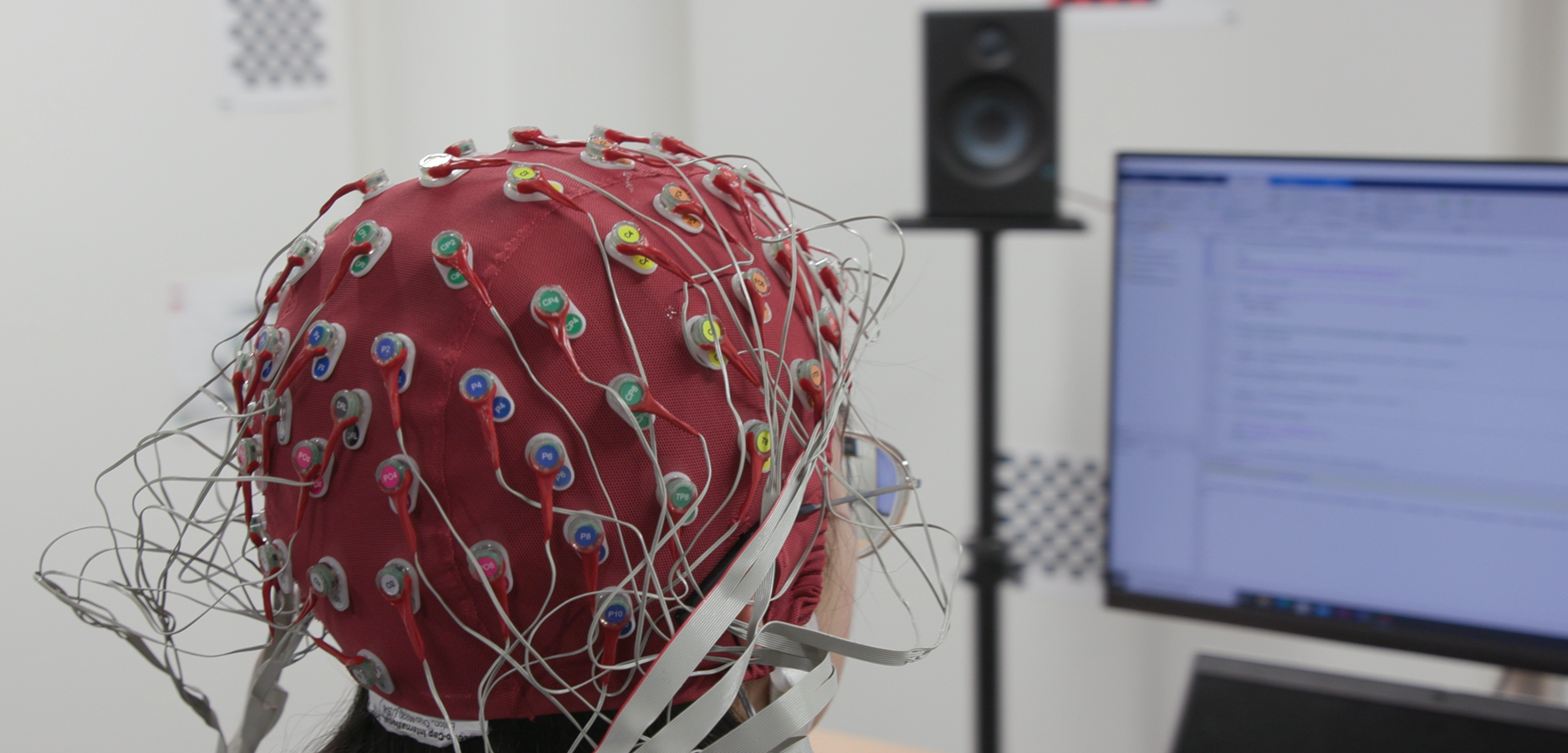
EEG signals were recorded with a 64-channel BioSemi Active Two system (BioSemi B.V., The Netherlands) using a sampling rate of 1024 Hz. We recorded from 64 scalp electrodes and two reference channels located at the mastoids. Testing was carried out in a dark room and participants were instructed to maintain visual fixation on a cross centred on the screen for the duration of each trial.
For the material used in the EEG experiment, we selected 25 audio snippets from the audiobook of a classic novel ("The Old Man and the Sea"), narrated by a male speaker in English. Each of the snippets was approximately three minutes in length. The experiment had five conditions: two spectral and two temporal degradations, and a clean control. Each condition had an equal number of trials. Temporal and spectral cut-offs of 5, 6 Hz and 0.3, 0.45 cyc/kHz, respectively were used for the degradations. Degradation and presentation order were randomized for each participant. We presented our stimuli using Presentation software (Neurobehavioral Systems, Inc., USA), which provided a trigger sent via parallel port and recorded by the EEG amplifier.